
In an era where financial landscapes shift with the speed of a digital pulse, staying informed is no longer a luxury; it is a necessity. EconomicWeeklyNews serves as a premier destination for investors, analysts, and everyday consumers who seek to understand the underlying currents of the global economy. From the fluctuations of Wall Street to the emerging industrial hubs in developing nations, the flow of capital dictates the quality of life for billions. By breaking down complex data into actionable insights, we provide a roadmap through the often-confusing world of fiscal policy and market dynamics.
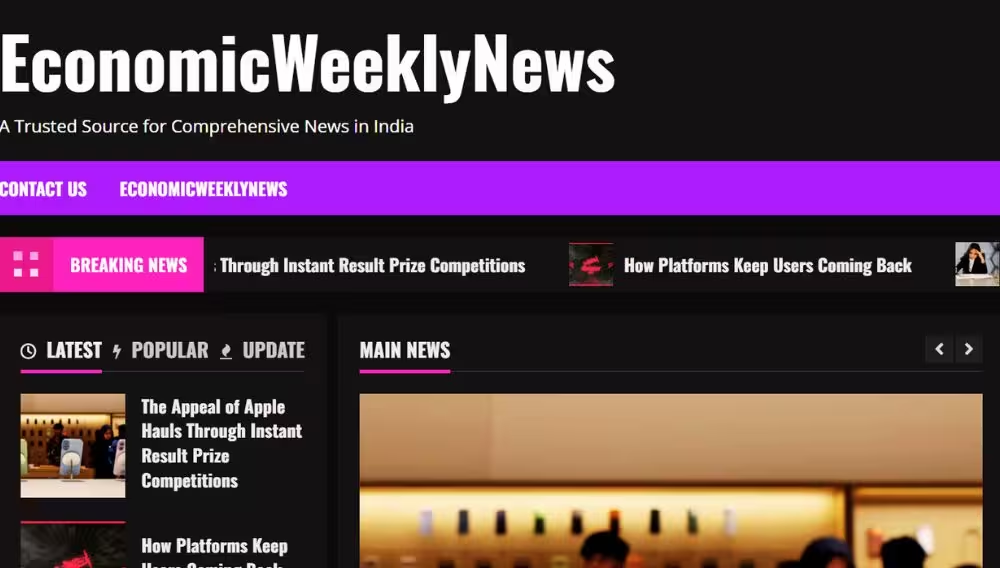
Understanding the economy requires more than just looking at a single stock ticker. It involves a holistic view of how geopolitical events, technological breakthroughs, and consumer behavior intersect. Whether it is the rise of decentralized finance or the impact of climate change on agricultural commodities, EconomicWeeklyNews is dedicated to delivering comprehensive coverage that matters to your wallet and your future.
The Vital Role of Consistent Market Monitoring
The primary reason professionals turn to EconomicWeeklyNews is the need for consistency. Financial markets do not rest, and a week in the world of economics can see the rise and fall of entire sectors. By providing a weekly synthesis of major events, we allow our readers to filter out the noise and focus on the signals that actually drive growth. This systematic approach to news consumption helps in identifying long term trends rather than reacting impulsively to daily volatility.
In the current global climate, regional developments often have a ripple effect on international trade. For instance, those interested in specific regional updates or niche market performances in West Africa can find specialized information regarding Burkina Faso and its local economic indicators. Understanding these specific markets is essential for a diversified portfolio. As emerging economies continue to integrate into the global supply chain, the data coming from these regions becomes increasingly relevant to investors in London, New York, and Tokyo.
Why Regional Data Matters for Global Investors
Regional economic stability is the bedrock of international trade. When we analyze specific jurisdictions, we look at GDP growth, infrastructure projects, and local governance. These factors determine how attractive a country is for foreign direct investment. By monitoring regional news, investors can spot opportunities before they become mainstream.
The Impact of Local Policy on International Trade
Local regulations often dictate the flow of goods and services across borders. When a nation changes its export tariffs or labor laws, the cost of production for multinational corporations shifts immediately. EconomicWeeklyNews tracks these policy changes to ensure that our readers are never caught off guard by sudden shifts in the global manufacturing landscape.
Analyzing Inflation and Interest Rate Cycles
One of the most discussed topics at EconomicWeeklyNews is the trajectory of inflation. Central banks around the world use interest rates as a primary tool to control the heating or cooling of an economy. When inflation rises, the purchasing power of the consumer diminishes, leading to a cascade of effects across the retail and housing sectors.
Monitoring the Federal Reserve in the United States, the European Central Bank, and other major institutions is a core part of our reporting. These organizations hold the keys to liquidity. If interest rates remain high for an extended period, borrowing costs for businesses increase, which can slow down innovation and expansion. Conversely, low interest rates can stimulate growth but also risk creating asset bubbles that eventually burst.
The Mechanics of Consumer Price Indices
The Consumer Price Index (CPI) is a critical metric that we analyze frequently. It measures the average change over time in the prices paid by urban consumers for a market basket of consumer goods and services. When the CPI spikes, it signals to EconomicWeeklyNews readers that the cost of living is rising, which usually precedes a shift in consumer spending habits.
How Central Banks Influence Your Savings
Central bank decisions do not just affect big banks; they affect your personal savings account. High interest rates might mean better returns on your savings but higher costs for your mortgage. We provide detailed breakdowns of these relationships to help you manage your personal debt and investment accounts more effectively.
Technology and the Digital Transformation
The intersection of technology and finance, often called Fintech, is perhaps the most disruptive force in the modern economy. EconomicWeeklyNews pays close attention to how artificial intelligence and blockchain technology are redefining traditional banking. These technologies are not just buzzwords; they are changing how transactions are processed, how creditworthiness is assessed, and how assets are managed.
Artificial intelligence allows for high frequency trading and predictive analytics that were impossible a decade ago. While this brings efficiency to the markets, it also introduces new risks. At EconomicWeeklyNews, we explore the ethical and practical implications of automated trading systems and what they mean for the retail investor who may not have access to the same tools.
Blockchain Beyond Cryptocurrency
While many people associate blockchain only with Bitcoin, the underlying technology has vast applications for the broader economy. From supply chain transparency to secure identity verification, blockchain is set to reduce friction in international trade. We regularly feature reports on how traditional industries are adopting these decentralized ledgers to improve their bottom line.
The Rise of Neobanks and Digital Wallets
Traditional brick and mortar banks are facing stiff competition from digital first institutions. These neobanks offer lower fees and better user experiences, forcing the entire industry to innovate. EconomicWeeklyNews tracks the growth of these platforms as they expand their reach into underserved markets, providing millions of people with access to financial services for the first time.
Supply Chain Resilience and Global Logistics
The global economy is built on a complex web of logistics. Recent years have shown us how fragile these chains can be. EconomicWeeklyNews provides in depth analysis of shipping routes, labor strikes, and raw material shortages. When a major port closes or a canal is blocked, the economic impact is felt globally within days.
We look at the shift from “just in time” manufacturing to “just in case” strategies. Companies are now prioritizing resilience over pure efficiency, which involves diversifying their suppliers and bringing production closer to home. This trend, known as “nearshoring” or “friendshoring,” is reshaping the industrial maps of continents.
The Cost of Energy in Manufacturing
Energy is the lifeblood of production. Whether it is oil, natural gas, or renewable sources, the price of energy dictates the price of the finished product. EconomicWeeklyNews monitors the energy markets to help businesses forecast their operational costs. The transition to green energy is also a major focus, as it presents both a massive cost and a massive opportunity for the global economy.
Labor Markets and the Future of Work
The way we work is changing, and so is the labor market. Remote work, the gig economy, and automation are altering the relationship between employers and employees. We analyze unemployment data and wage growth to understand the health of the middle class, which remains the primary engine of consumption in most developed nations.
Investment Strategies for a Volatile World
At EconomicWeeklyNews, we believe that knowledge is the best defense against market volatility. Diversification is a common theme in our reporting. By spreading investments across different asset classes, such as stocks, bonds, real estate, and commodities, investors can protect themselves from a downturn in any single sector.
We also emphasize the importance of long term thinking. While it is tempting to chase the latest investment craze, sustainable wealth is usually built through disciplined saving and informed decision making. Our weekly recaps are designed to provide the context needed to stay the course during turbulent times.
Understanding Market Sentiment
Markets are driven by more than just numbers; they are driven by human emotion. Fear and greed often push prices far away from their intrinsic value. EconomicWeeklyNews explores the psychology of the markets, helping readers recognize when a trend is driven by fundamentals and when it is driven by hype.
Real Estate as an Economic Indicator
The housing market is often a leading indicator of economic health. When people feel confident about their financial future, they are more likely to make long term commitments like buying a home. We track mortgage rates, housing starts, and rental trends to provide a clear picture of the real estate landscape and its impact on the broader economy.
Frequently Asked Questions
What is the primary goal of EconomicWeeklyNews? Our goal is to provide clear, concise, and accurate financial news and analysis. We aim to help our readers understand how global and regional economic events affect their personal and professional lives.
How often is EconomicWeeklyNews updated? As the name suggests, we provide a major weekly synthesis of economic events, but we also offer daily updates on breaking news that has the potential to shift global markets.
Can EconomicWeeklyNews help me with my personal investments? While we provide data and expert analysis, we do not offer personalized financial advice. Our content is designed to inform your own research and help you make more educated decisions in consultation with a financial advisor.
Why do you cover emerging markets like West Africa? In a globalized economy, no region exists in a vacuum. Growth in emerging markets often creates new opportunities for trade and investment that can benefit a global portfolio.
Does EconomicWeeklyNews cover environmental economic issues? Yes, we believe that the transition to a sustainable economy is one of the most significant economic stories of the century. We cover green energy, carbon markets, and the financial risks associated with climate change.
How can I stay updated with the latest reports? The best way to stay informed is to visit our site regularly and engage with our weekly deep dives into the most pressing economic issues of the day.
Conclusion: Empowering Your Financial Future
The world of finance is constantly evolving, but the principles of sound economic analysis remain the same. By staying curious and informed, you can navigate the challenges of inflation, market volatility, and technological disruption. EconomicWeeklyNews is committed to being your partner in this journey, providing the insights and data you need to thrive in a rapidly changing world.
Whether you are monitoring global trade shifts or looking into specific regional markets, the information you consume today will shape your financial reality tomorrow. Trust EconomicWeeklyNews to deliver the depth and clarity required to master the complexities of the modern economy. In the end, the goal is not just to keep up with the news, but to understand the world well enough to build a secure and prosperous future.
Read Also : blogbuzznews.com: What It Is and How It Helps?